
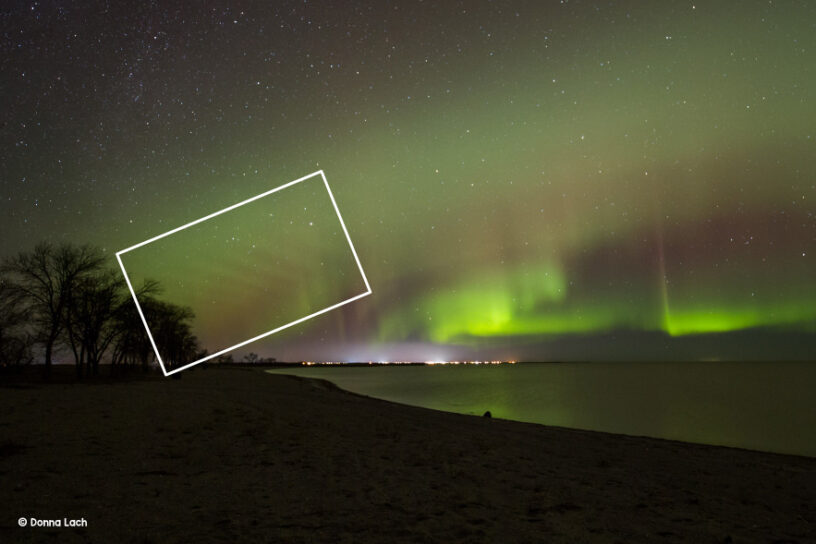
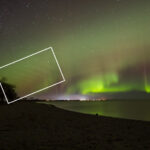
Maxime Grandin, a researcher at the Finnish Meteorological Institute (FMI), and his colleagues have conducted the first comprehensive study of dune aurora observations reported to the Skywarden Taivaanvahti database by citizen scientists between 2000 and 2025. Dune aurora consist of approximately parallel brighter stripes, forming a wave-like pattern in the dim, diffuse green aurora. The phenomenon was discovered only a few years ago thanks to Finnish citizen scientists. Its formation mechanism is not yet fully understood, but it is thought to be a visible manifestation of an atmospheric wave occurring at an altitude of around 100 km, made visible by the diffuse auroral emission.
The study analysed a total of 308 verified observation reports submitted by more than 180 citizen observers from Europe, North America, Australia and New Zealand. The aim was to investigate how the occurrence of dune aurora depends on local time, geomagnetic latitude, season and parameters related to geomagnetic activity.
According to the study, dune aurora occurs mainly in the evening, on the equatorial side of the auroral oval. The number of observations peaks in October and March, and the phenomenon is systematically associated with strong horizontal ionospheric currents. Dune aurora can also remain visible for several hours. The results suggest that dune aurora may arise from the combined effects of several processes. These include particle precipitation (possibly involving protons) from near-Earth space into the upper atmosphere, conditions favouring the occurrence of certain types of waves near the mesopause, and processes taking place in the nightside magnetosphere.
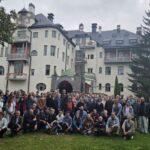
The study highlights the importance of citizen science in investigating phenomena that conventional research instruments may not always detect or capture adequately. It also demonstrates the value of international collaboration between researchers and citizen observers. One example is the ARCTICS project (2023–2025), funded by ISSI-Bern and led by Maxime Grandin. Such collaborative initiatives can lead to new discoveries while also strengthening interaction between the scientific community and society.
More information
Maxime Grandin, Research Scientist, maxime.grandin@fmi.fi
Published article:
Grandin, M., Juusola, L., Partamies, N., Bruus, E., Rautiainen, J., Lach, D., Jia, J., van de Kamp, M., Karvinen, E., Kauristie, K., and Hoppe, T. (2026). “Dune aurora: Survey from a citizen science database.” Annales Geophysicae, 44, 855–880.

Leave a Reply
You must be logged in to post a comment.